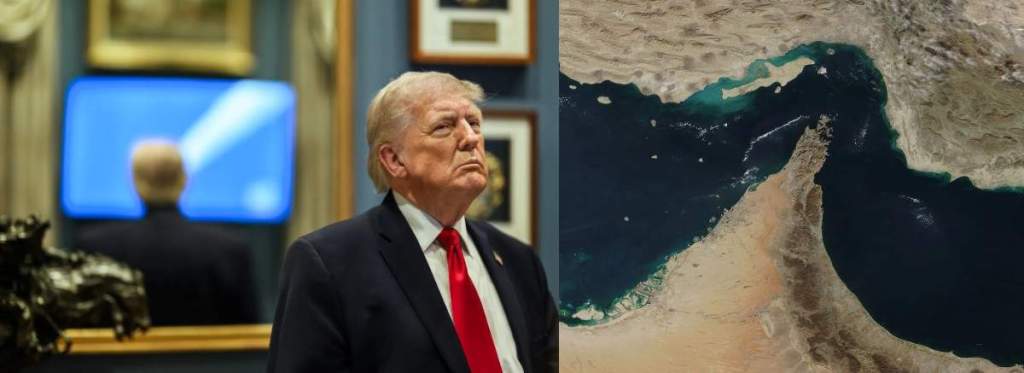
President Donald Trump held a 40-minute phone conversation with Prime Minister Narendra Modi. This conversation was their third this year. It comes at a time when the world is holding its breath over the escalating conflict in West Asia. The tone of the call was strikingly personal. President Trump reportedly ended the discussion by saying, I just want you to know we all love you. However, beneath this layer of warmth, the call was a calculated move by the White House to manage the fallout of its newly implemented naval blockade.+1
The Nature of the American Reach-Out
The primary reason for this call appears to be a direct attempt by the United States to keep India on its side. Just 48 hours ago, the Islamabad talks failed to produce a ceasefire. Consequently, the United States has moved into a more aggressive phase of its strategy. By reaching out to Modi, Trump is likely trying to ensure that India does not become a hurdle in the American plan to choke Iranian trade.
India is a major global player with significant energy interests in the Gulf. Washington understands that a blockade in the Strait of Hormuz hurts India as much as it hurts Iran. Therefore, the call serves two purposes. First, it offers a high-level reassurance that the United States values the strategic partnership. Second, it attempts to align the two nations on the narrative that the Strait of Hormuz must remain open and secure. This is a delicate balancing act because the American blockade is the very thing making the waterway insecure for global shipping.
The Big Beautiful Blockade So Far
The naval blockade officially began on the morning of April 13, 2026. Under instructions from President Trump, the US Navy is currently interdicting every vessel in international waters that has paid a toll to the Iranian government. The United States has declared these tolls to be illegal extortion. The blockade targets all maritime traffic entering or exiting Iranian ports and coastal areas.+3
So far, the results have been immediate and dramatic. Oil prices have surged past 100 dollars per barrel. Global stock markets have shown significant volatility as traders fear a total shutdown of the world’s most important energy chokepoint. Trump has also issued a stern warning. He stated that any Iranian attack boats or military vessels challenging the blockade would be immediately eliminated. This aggressive posture has effectively turned the Persian Gulf into a high-tension trigger zone where a single mistake could lead to a full-scale war.+1
Pakistan’s Troop Deployment to Saudi Arabia
While India and the United States are talking, another significant shift is happening in the region. Pakistan has just completed a massive military deployment to Saudi Arabia. Approximately 13,000 ground troops and at least ten fighter jets have arrived at the King Abdulaziz Air Base. This move was made under the Saudi-Pakistan Mutual Defense Agreement which was signed last year.+1
This deployment is particularly interesting because it happened on the same day the Islamabad ceasefire talks collapsed. It appears that Pakistan is playing a double role. While it tried to act as a mediator in its own capital, it was simultaneously preparing to back the Saudi monarchy militarily. This large force is now stationed very close to critical oil facilities that have been targeted by Iran in the past. It effectively places Pakistani soldiers on the front lines of any potential Iranian retaliation against Saudi Arabia.
Expected Outcomes
The expected outcome of the Trump-Modi call is a period of cautious cooperation. India will likely continue its independent naval escorts under Operation Sankalp. However, New Delhi will now have a clearer understanding of the American red lines. For the United States, keeping India quiet or supportive is essential for the legitimacy of its blockade.
World is seeing a complete redesign of regional alliances. The United States is using a mix of aggressive blockades and personal diplomacy to force its agenda. Meanwhile, India is trying to protect its energy security without getting dragged into a war. The failure of the Islamabad talks has left the region without a diplomatic safety net. Now, the focus remains on the narrow waters of the Strait of Hormuz. Everyone is waiting to see if the love expressed in the phone call can survive the cold reality of a naval war.
About the Author