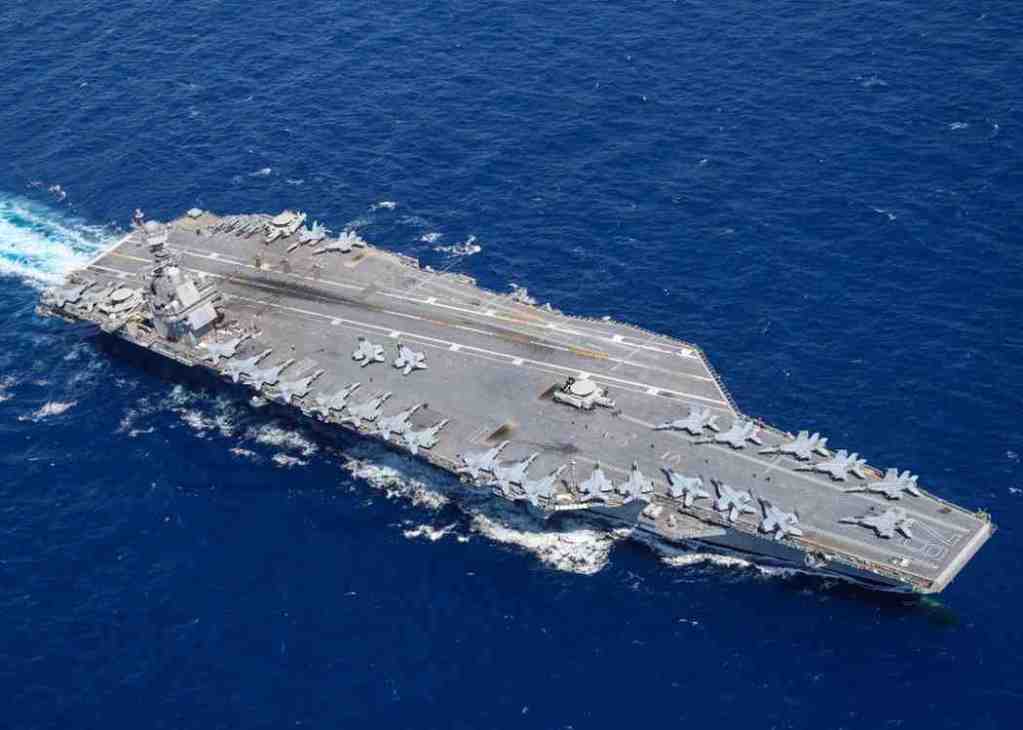
As of late February 2026, the Persian Gulf has become the most crowded piece of real estate on the planet. With the US Air Mobility Command completing its massive airbridge and two Carrier Strike Groups, the USS Abraham Lincoln and USS Gerald R. Ford, patrolling the Arabian Sea, the strategic “noose” around Tehran is tightening. The sheer weight of American air power, backed by forty percent of the E-3 Sentry fleet, suggests a conflict that could be over in hours.
But in the corridors of the Islamic Republic of Iran Air Force (IRIAF) headquarters, the perspective is different. While Western analysts often dismiss the IRIAF as a “museum of the Cold War,” the reality is more nuanced. Iran knows it cannot win a conventional air war against a superpower. Instead, it has spent decades preparing for a war of attrition, utilizing a “system of systems” that blends aging wings with high-tech missiles and asymmetrical chaos.
The IRIAF: A Legacy Fleet or a Paper Tiger?
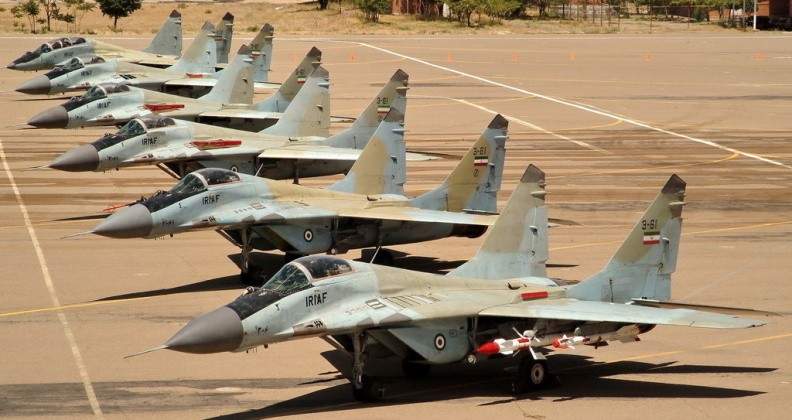
On paper, the Iranian Air Force is a relic. Its backbone still consists of American-made F-14 Tomcats, F-4 Phantoms, and F-5 Tigers purchased before the 1979 Revolution. For any other nation, these would be scrap metal. However, through a mix of indigenous reverse-engineering and clandestine supply chains, Iran has kept these “museum pieces” flying.
In early 2026, the force received a modest upgrade with the arrival of a new batch of Russian MiG-29s and Mi-28NE attack helicopters. Yet, in a 1v1 engagement against a US F-35 or F-22, the IRIAF would indeed collapse within the initial hours. Their radars would be jammed before they even took off, and their runways would likely be cratered by B-21 or B-2 Spirit strikes—similar to the precision seen during Operation Midnight Hammer in June 2025.
The IRIAF’s true role is not dogfighting; it is “Mosaic Defense.”
“Iran’s military doctrine has shifted from offensive air superiority to a decentralized ‘Mosaic Defense.’ The goal is not to stop the US at the border, but to survive the initial ‘decapitation’ strike and fight a thousand small battles within their own mountainous geography.”
The “Unseen” Air Force: Ballistic Missiles and Drones
If the IRIAF jets are the shield, the ballistic missile arsenal is the sword. Iran possesses the most significant missile force in the Middle East, estimated between 2,500 and 3,000 ballistic missiles.
Unlike aircraft, which require vulnerable runways, Iran’s missiles are housed in “missile cities”, massive underground tunnel complexes carved into the Zagros Mountains. In the event of war, Iran’s response would not be a squadron of F-14s, but a saturation strike of Khorramshahr-4 and Haj Qasem missiles aimed at every US “hub and spoke” in the region.
| System Type | Primary Threat | Strategic Impact |
| SRBMs (Fateh-110) | US bases in Iraq/Kuwait | Precision strikes on hangars and fuel depots |
| MRBMs (Sejjil) | Israel and Regional Partners | Deterrence against high-value infrastructure |
| Shahed-136/139 | “Swarm” attacks | Overwhelming Aegis and Patriot defenses |
The Shahed swarm is perhaps the most dangerous variable. These “suicide drones” are cheap, hard to detect on radar, and can be launched from the back of a standard civilian truck. During drills in February 2026, Iran demonstrated the ability to launch over 100 drones simultaneously. Even if the US intercepts 90% of them, the remaining 10% hitting a carrier’s flight deck or a refinery is a strategic catastrophe.
Bavar-373 vs. Stealth
Iran has stopped pretending it can buy air superiority; instead, it is trying to buy (and build) a “No-Fly Zone.” The indigenous Bavar-373 surface-to-air missile system has undergone significant upgrades as of 2025. Tehran claims it can now track stealth targets at ranges exceeding 200 km, effectively making it a competitor to the Russian S-400.
While these claims are often met with skepticism, the “sensor gap” reported by satellite imagery this month suggests Iran is integrating Russian radars with domestic launchers to create a resilient, layered defense. They aren’t trying to shoot down every F-35; they are trying to make the cost of entry so high that the US public loses its appetite for a “weeks-long” operation.
The Asymmetric Response: Proxies and the Strait of Hormuz
The Iranians have an “extended wing” in the form of its regional proxies, the Axis of Resistance. If the US strikes Tehran, the response will likely be felt in Lebanon, Yemen, and Iraq.
- Hezbollah: Can rain thousands of rockets on Northern Israel, forcing the US to divert air defense assets away from the Gulf.
- The Houthis: Can use anti-ship cruise missiles to choke the Bab-el-Mandeb, doubling the global impact of a Hormuz closure.
- IRGC Navy: Their doctrine relies on “swarm” tactics in the Strait of Hormuz. Small, fast-attack boats armed with torpedoes and mines can turn the world’s most vital oil artery into a graveyard in hours.
A war with Iran is not a bilateral exchange. It is a regional conflagration. Iran’s strategy is to hold the global economy hostage by threatening the 20% of global oil that flows through Hormuz. As an Iranian official recently warned UN Secretary-General Guterres, “Every American asset in the region is a legitimate target.”
A War of Attrition
Is the Iranian Air Force a paper tiger? In a conventional sense, yes. It cannot win an aerial duel, and its primary airframes would likely be destroyed in the first 72 hours of a high-intensity conflict.
However, as a component of a broader “National Defense Strategy,” the IRIAF is merely the first layer of a very prickly onion. The real danger lies in the reconstitution of its forces. Iran’s focus on underground hardening, decentralized command (“Mosaic Defense”), and a massive “airforce” of missiles and drones means that “victory” for the US might require a ground occupation, something no one in Washington or the region has the stomach for in 2026.
Iran’s plan is simple: survive the storm, bleed the enemy through proxies, and ensure that the price of “peace” is higher than the price of concessions.
About the Author